AI Appointment Setting: How It Works and When It Beats Hiring
 Cameron Richards, FounderUpdated 7 min read
AI appointment setting beats hiring when you have plenty of leads and the bottleneck is getting qualified prospects into the diary fast. A UK in-house setter costs roughly £35,000-£45,000 a year once salary, employment costs and tools are added, paid before they book anything. AI appointment setting can instead be paid per booked appointment.
Salary, tools, management time, a ramp-up period, and then you find out whether the hire can actually do the job. That difference in risk, more than any difference in technology, is why the buying question has changed from "does AI work?" to "when does AI beat hiring?"
This guide answers both. What AI appointment setting actually does, what it costs against a human setter, where it wins, where it loses, and the numbers behind 3,000+ appointments booked this way.
What is AI appointment setting?
AI appointment setting is software that holds real two-way conversations with your leads, qualifies them, handles their questions and objections, and books qualified prospects directly into your sales calendar.
The operative word is conversations. This has nothing in common with the automated drip campaigns of five years ago that fired the same three messages at everyone and hoped. A modern AI appointment setter reads each reply and responds to what the lead actually said, the way a good human setter would.
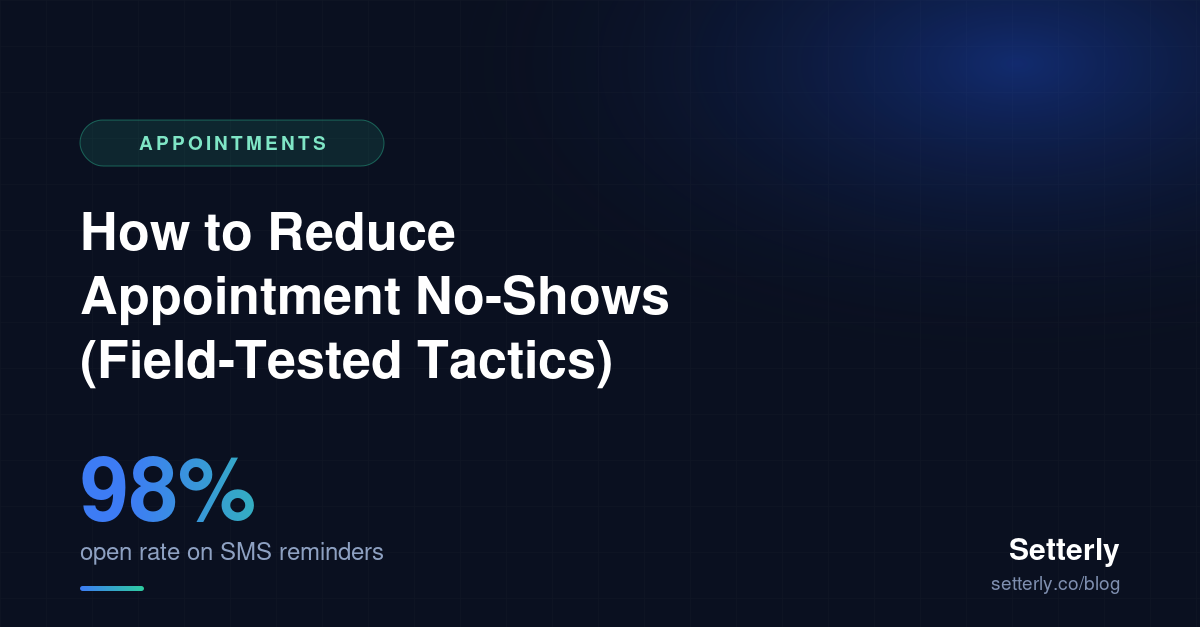
At Setterly, those conversations happen over SMS, because that is where leads actually respond. SMS open rates run at around 98%, against roughly 20% for email, and a text is answerable in four seconds from anywhere. We have run 260,000+ of these conversations across home improvement, home services and automotive.
How an AI appointment setter actually works
A full automated appointment booking system runs four jobs in sequence.
1. It opens and holds a real conversation
The AI reaches out by SMS, referencing the lead's original enquiry, and responds naturally to whatever comes back. Questions get answered. "Who is this?" gets handled. "How much roughly?" gets a sensible reply that moves towards the appointment. Every response is generated for that specific exchange.
2. It qualifies before it books
Good setters qualify, and so does good AI. Budget signals, timeline, decision-making authority, genuine need: the AI works these into the conversation naturally rather than interrogating the lead with a checklist. Unqualified leads get politely parked instead of being pushed into your diary, which is the main reason AI-booked appointments show up.
3. It handles objections
"We're just looking." "We already got a quote." "Can you just email me something?" A trained AI setter handles the standard objections consistently, every time, at 11pm on a Sunday, with none of the variance you get across a human team's good days and bad days.
4. It books the appointment and protects it
When the lead is qualified and willing, the AI offers times, agrees one, and books it straight into your calendar. Setterly's appointment flow then sends SMS confirmations and reminders automatically, so the appointment that was booked is also the appointment that happens. More on that in how to reduce appointment no-shows.
Your sales team's involvement starts when a qualified, confirmed appointment lands in the diary. You can see the full flow on our how it works page.
AI appointment setter vs hiring: the real cost comparison
Now the maths that decides most of these purchases.
A human appointment setter or SDR in the UK typically costs £25,000 to £35,000 in base salary before commission. Add employer's NI, pension, a phone system, a CRM seat, and the recruitment and management time, and a single setter is a £35,000 to £45,000 annual commitment. Then add the parts nobody budgets for: a ramp-up period measured in months, holidays, sickness, turnover, and the risk that this particular hire simply is not very good at it.
All of that is paid up front, before appointment one. If the hire underperforms, you still paid.
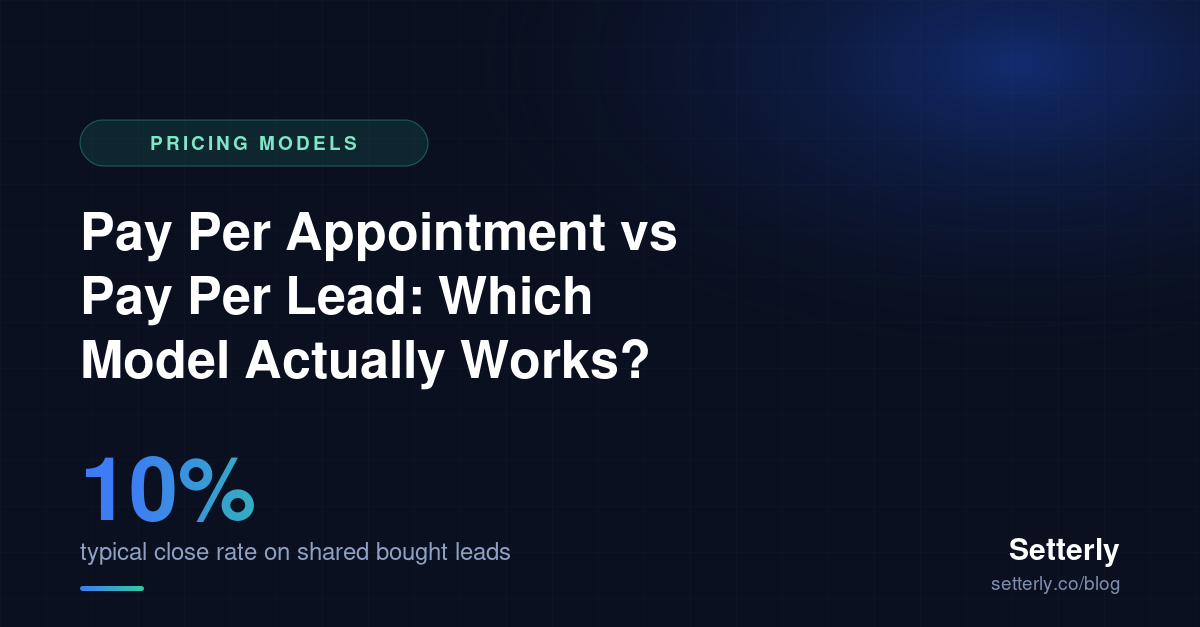
An AI appointment setter flips the structure. There is no salary, no ramp, no turnover, and with Setterly's model there is no setup fee or retainer either. You pay per booked, qualified appointment, priced on your average job value. The cost scales exactly with the output, so the worst case is a bill of zero. For how this compares with buying leads, see pay per appointment vs pay per lead.
There is also a capacity difference that the salary comparison hides. One human setter works around 1,700 hours a year and one conversation at a time. An AI setter works every hour of the year and holds hundreds of conversations simultaneously. To match that coverage with humans you are hiring a team, and multiplying every cost above.
Where AI appointment setting excels
Speed to lead. Leads contacted within 5 minutes are roughly 9x more likely to convert than leads contacted later. An AI setter responds in seconds, every time, including the enquiry that arrives at 9pm on a Saturday. No human team matches that consistently.
Volume. Product launch, seasonal spike, a database blitz: the AI absorbs 5,000 conversations as comfortably as 50. When we ran a Christmas campaign for CarFinance247, a UK car finance broker, on 3,895 leads its 200-strong sales team had already worked for two weeks, the system booked 114 appointments over the holiday. Emily Henshall, their Head of Paid Media, put it plainly: "Setterly helped us unlock additional value from a database of over 1,000,000 leads through AI-driven SMS outreach."
Aged leads. Working a database of leads that went quiet months ago is soul-destroying for humans and perfect for AI, which never gets demoralised by silence. This is database reactivation, and it is where Setterly's results are strongest. For Cloudy2Clear, a UK misted double glazing repair franchise, we re-engaged 6,769 old enquiries, achieved a 64% reply rate, booked 673 appointments and generated £639,350 in pipeline, with £107,000+ closed. Full numbers are in our Cloudy2Clear case study, and the method is in our database reactivation guide.
Consistency. The AI runs the qualification script perfectly on conversation 1 and conversation 10,000. It never has a rough Friday, never softens the qualifying questions to hit a booking target, and never leaves for a competitor taking its training with it.
Where AI appointment setting has limits
Honest answer: the AI books the meeting, it does not close the deal.
Complex sales conversations stay human. Negotiating price on a £30,000 conservatory, structuring finance on a vehicle, judging a hesitation in someone's voice at the kitchen table: that is your closer's job, and no serious operator should pretend otherwise.
Relationship-led B2B deals with six stakeholders and a nine-month cycle are also a poor fit. AI appointment setting shines where there are many leads, a clear qualification pattern, and a sales process that starts with a booked appointment: home improvement, home services and car finance businesses, and similar high-volume consumer-facing operations.
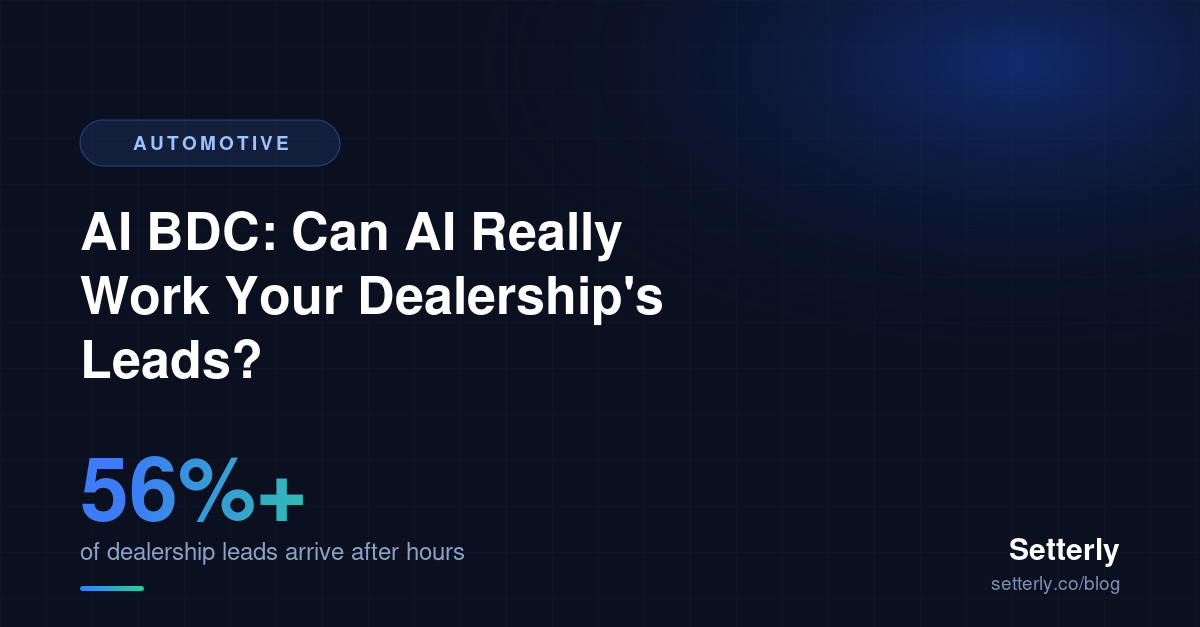
The right mental model is division of labour. The AI does the high-volume, repetitive, speed-sensitive work of engaging and qualifying leads. Your humans do the high-skill, high-value work of closing them. Each side gets more of what it is good at. For dealerships, our AI BDC guide shows where that line sits.
How pay-per-appointment pricing changes the decision
Most AI appointment setting tools charge a monthly software fee, which quietly recreates the hiring problem: you pay whether or not appointments arrive.
Setterly charges per booked appointment. That does three things to the risk equation.
First, the downside disappears. If the campaign produced nothing, you would pay nothing, so the decision to trial it needs no leap of faith.
Second, incentives align. We only earn when qualified appointments land in your diary, so everything in our system, from the conversation design to the SMS reminders that protect show rates, is tuned towards appointments that happen.
Third, the cost becomes a clean line in your unit economics. A fixed price per appointment, against your close rate and average order value, tells you in one calculation whether the channel is profitable. Salaries and software fees never resolve that cleanly. Our pricing page explains the model.
The hiring question, answered
If your leads are high-volume, your qualification is patterned, and your bottleneck is getting qualified prospects into the diary fast, AI appointment setting beats hiring on cost, speed, coverage and consistency. Keep your humans for the conversations that need humans: the close.
And with pay-per-appointment pricing, you can test that claim against your own database without risking a pound.
Frequently asked questions
What does an AI appointment setter actually do?
It holds two-way conversations with leads, usually over SMS, qualifies them on need, timeline and authority, answers questions, handles objections, and books qualified prospects directly into your sales calendar, then sends confirmations and reminders. The sales team receives ready-to-attend appointments rather than raw leads.
How much does AI appointment setting cost compared to hiring?
A UK appointment setter typically costs £35,000 to £45,000 a year once salary, employment costs, tools and management are included, paid regardless of results. AI appointment setting priced per booked appointment, like Setterly's, has no setup fee or retainer: you pay a fixed amount per appointment actually booked, so cost tracks output exactly.
Can AI really handle objections from leads?
Yes, within the appointment-setting stage. Standard objections such as "just looking", "already have a quote" and "send me an email" are handled consistently and naturally across every conversation. Complex negotiation and closing conversations remain a job for your human sales team.
Do AI-booked appointments actually show up?
When the system qualifies before booking and runs SMS confirmations and reminders, yes. Appointments born from a genuine two-way conversation attend at higher rates than form-fill bookings because the lead has invested in the exchange before any slot was offered. Setterly has booked 3,000+ appointments on this model.