Speed to Lead Statistics: 8 Numbers on Response Time
 Cameron Richards, FounderUpdated 5 min read

The most important speed to lead statistic is this: leads contacted within 5 minutes are roughly 9x more likely to convert than leads contacted after 30 minutes. Yet the average dealership takes 47 minutes to reply. Below are the eight response time numbers that matter, what slow replies cost, and how to fix it.
That gap is where most sales teams quietly lose the majority of the money they spend generating leads. You pay for the click, the form fill, the phone number. Then the lead sits in an inbox while the prospect rings your competitor.
What is speed to lead?
Speed to lead is the time between a prospect enquiring and your business making first contact. It is measured in minutes, and it is one of the strongest predictors of whether a lead ever converts.
Every minute of delay gives the prospect time to cool off, get distracted, or enquire somewhere else. The statistics below show exactly how steep that decay curve is.
The 8 speed to lead statistics
- Leads contacted within 5 minutes are roughly 9x more likely to convert than leads contacted after 30 minutes.
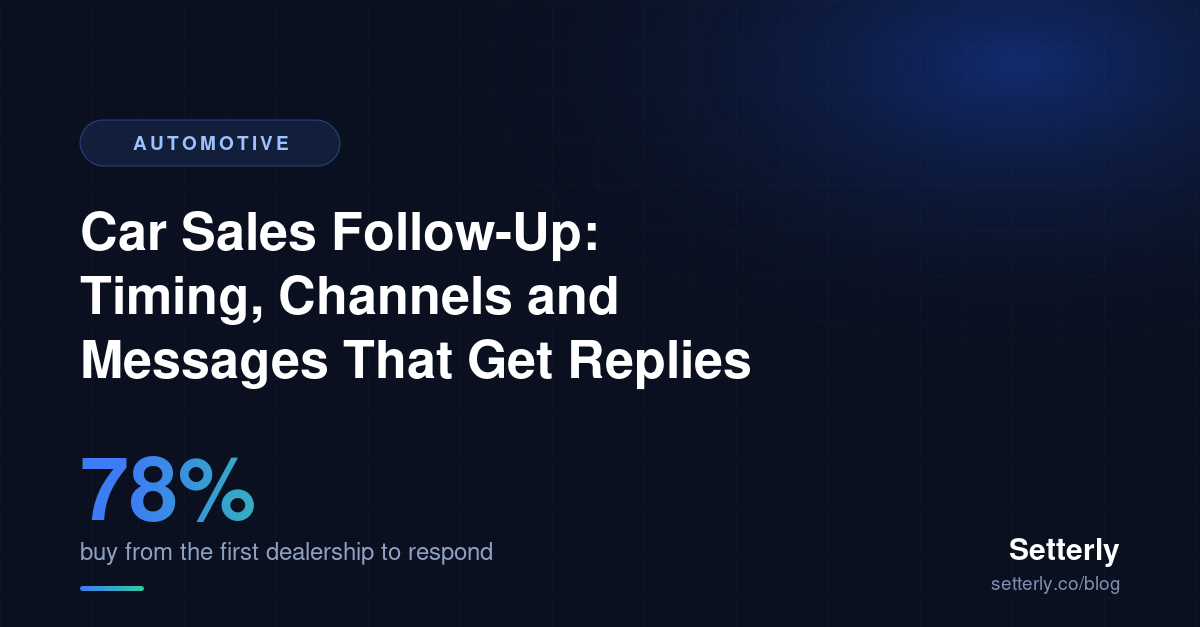
- 78% of car buyers purchase from the first dealership that responds.
- The average dealership takes 47 minutes to respond to a lead.
- Only 13.2% of dealerships respond within 5 minutes.
- 28.3% never respond at all within 5 days.
- Between 56% and 60% of leads arrive after hours, in the evenings and at weekends.
- Around 23.5% of dealer leads miss the 24-hour follow-up window.
- Roughly 13.3% of leads never enter the CRM at all.
The 5-minute window
Read the first number again. The same lead, the same interest, the same budget. The only variable is how long you took to reply, and it changes the outcome by a factor of nine.
First responder wins
The 78% figure comes from automotive, but the pattern holds across high-consideration purchases generally. Home improvement buyers requesting three quotes behave the same way: the first company to engage sets the frame for every conversation that follows.
Being second is expensive. Being third usually means you were never really in the race.
The 47-minute reality
So the window that decides the sale is 5 minutes, and nearly 9 in 10 businesses miss it. More than a quarter never show up at all.
The after-hours problem
People research kitchens, windows, and cars on the sofa at 9pm. Your team clocks off at 6. The majority of your enquiries land in an empty room, and by morning the 5-minute window has been closed for twelve hours.
The leads that fall through entirely
Even the leads that survive the first response often die later. One lead in eight is paid for, generated, and then simply lost before anyone could even fail to follow it up.
What slow lead response time actually costs
Run the maths on your own numbers. Take your monthly lead volume, your average close rate, and your average order value. Now apply the statistics above.
If 56% of leads arrive after hours and get a next-morning response at best, the 9x conversion advantage is gone on more than half your pipeline before anyone starts work. If a quarter of leads never get a response inside 5 days, that portion of your ad spend converts at close to zero.
For a home improvement company with a £5,000 average job, or a dealership holding £1,500 to £3,000 of gross per unit, the compounding effect across a year is brutal. The leads were real. The demand was real. The response was late.
If you want to see what recovering that looks like in practice, our results page shows the numbers from real campaigns.
The two-part fix
Fixing speed to lead means solving two separate problems. Most businesses only ever attempt the first.
Part one: respond faster to new leads
This is the part everyone talks about. Instant auto-acknowledgement, lead alerts to mobiles, tighter handover between marketing and sales, and cover for evenings and weekends.
Do it. Every minute you shave off first response moves you up that 9x curve. But even a well-drilled team has a ceiling, because humans sleep, take holidays, and work one conversation at a time. That is why Setterly built an instant-reply speed to lead service for new enquiries.
Part two: recover the leads that already slipped
Here is the part almost nobody does. Every business that has been generating leads for more than a few months is sitting on a database of enquiries that went cold: leads that got a slow response, no response, or two follow-up attempts before the team moved on.
Those people raised their hand. Many still want the kitchen, the windows, the car. They just stopped hearing from you.
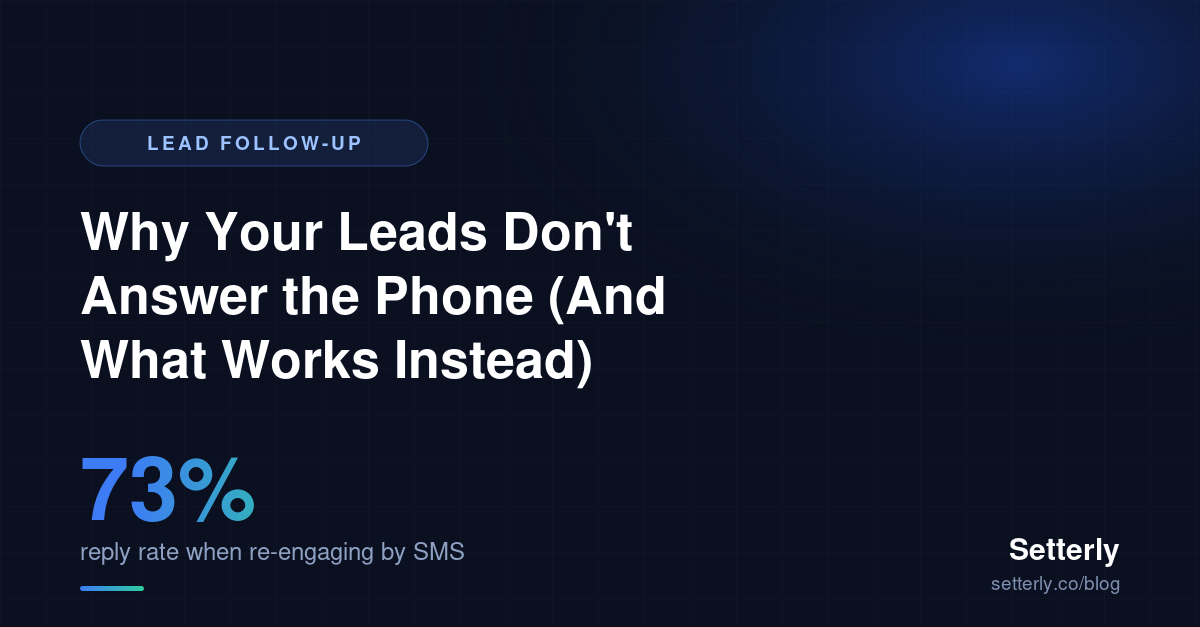
This is the lane Setterly works in. We plug into your CRM, take the old and unworked leads, and re-engage them with real AI-powered SMS conversations. The AI holds a genuine back-and-forth, qualifies interest, answers questions, and books appointments straight into your calendar. You can see exactly how it works on our how it works page, and the full method is in our database reactivation guide.
The evidence that dead leads still convert is not theoretical. For Cloudy2Clear, a UK misted double glazing repair franchise, we re-engaged 6,769 old enquiries, got a 64% reply rate, booked 673 appointments and generated £639,350 in pipeline, with £107,000+ closed. For CarFinance247, a UK car finance broker, one campaign over Christmas on 3,895 leads that a 200-strong sales team had already worked for two weeks booked 114 appointments and £171,000 in pipeline.
As Emily Henshall, Head of Paid Media at CarFinance247, put it: "Setterly helped us unlock additional value from a database of over 1,000,000 leads through AI-driven SMS outreach." If you run a dealership, our car dealerships page shows how this works on your stock and your leads.
Speed going forward, recovery looking back
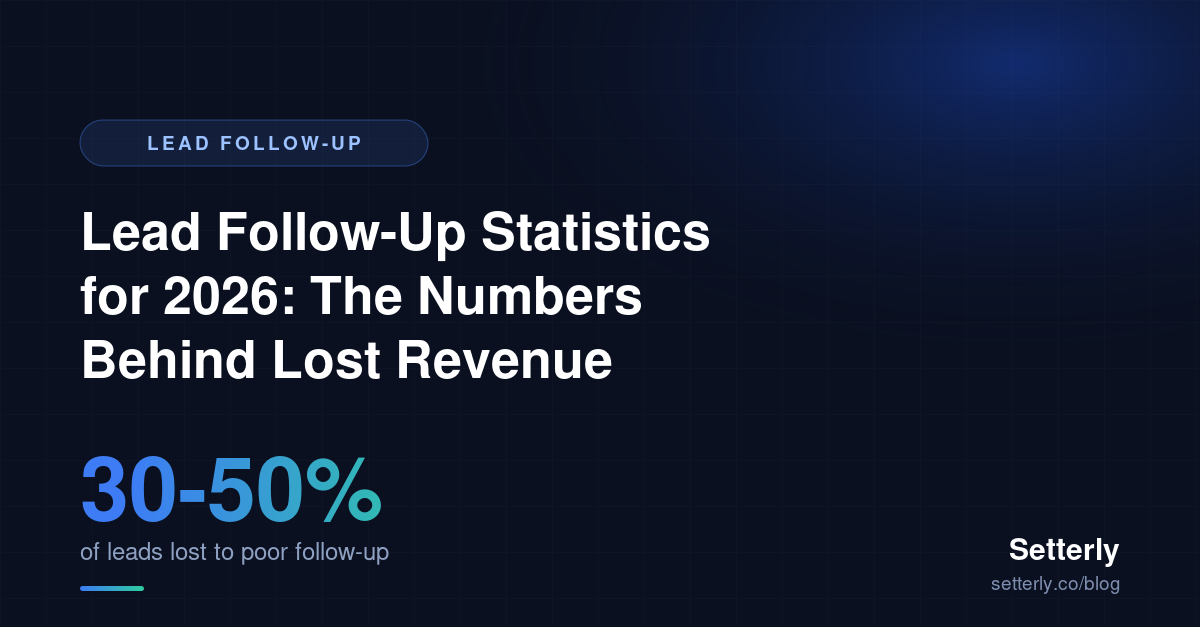
Across 3,000+ booked appointments and 260,000+ SMS conversations, the pattern is consistent. Speed wins new leads, and systematic re-engagement wins back the old ones. A sales operation that only does the first is leaving the larger, cheaper pool untouched, because reactivated leads cost nothing new to generate. For the wider set of numbers, see our lead follow-up statistics.
You already paid for those leads once. Recovering them is the highest-margin revenue available to you this quarter.
Frequently asked questions
What is a good lead response time?
Under 5 minutes. Leads contacted within 5 minutes are around 9x more likely to convert than leads contacted after 30 minutes. In automotive, 78% of buyers purchase from the first dealership that responds, so first contact should happen in minutes, around the clock.
What percentage of leads arrive after business hours?
Between 56% and 60% of dealership leads arrive after hours, in evenings and at weekends when sales teams and BDCs are unstaffed. Without automated response, the majority of enquiries wait overnight for first contact and convert at a far lower rate.
Can old leads still be converted?
Yes. Setterly re-engaged 6,769 old enquiries for Cloudy2Clear and booked 673 appointments, generating £639,350 in pipeline. A CarFinance247 campaign over Christmas, on leads a 200-strong sales team had already worked for two weeks, booked 114 appointments.
How does AI improve speed to lead?
AI responds to every lead instantly, 24/7, by SMS. It holds a real two-way conversation, qualifies the enquiry, and books an appointment for a human salesperson. It also works backwards through aged CRM leads that teams never had capacity to follow up.