Why Your Leads Don't Answer the Phone (And What Works Instead)
 Cameron Richards, FounderUpdated 6 min read
Your leads don't answer the phone because they screen unknown numbers, and a call demands a live conversation at a moment they didn't choose. What works instead is a text that names your company and their enquiry, which is how 64% of 6,769 written-off leads replied in one of our campaigns.
Five calls, five voicemails, nothing. The lead filled in your form two days ago and now behaves like you invented them. The same person declining your call is answering texts within minutes, because a text tells them who's asking and why before they commit to anything.
This post covers why prospects stop picking up, why the problem keeps getting worse, and the channel-switching play that turned thousands of written-off leads into 673 booked appointments.
Why leads don't answer the phone anymore
They can't tell it's you
Your lead enquired with a company name. Your call arrives as a naked number. Between spam filters, "Potential Spam" flags and years of nuisance calls, an unrecognised number now signals risk, and the default response to risk is decline.
In that moment they're rejecting an unidentified interruption, a sensible habit they apply to every caller they can't place. Their interest in your business usually survives untouched.
A call demands everything at once
Answering a call means dropping whatever you're doing and negotiating live with a salesperson, unprepared. Your lead is at work, on the school run, or in a queue at Tesco. Even genuinely interested buyers dodge calls that arrive at the wrong moment, and almost every moment is the wrong moment.
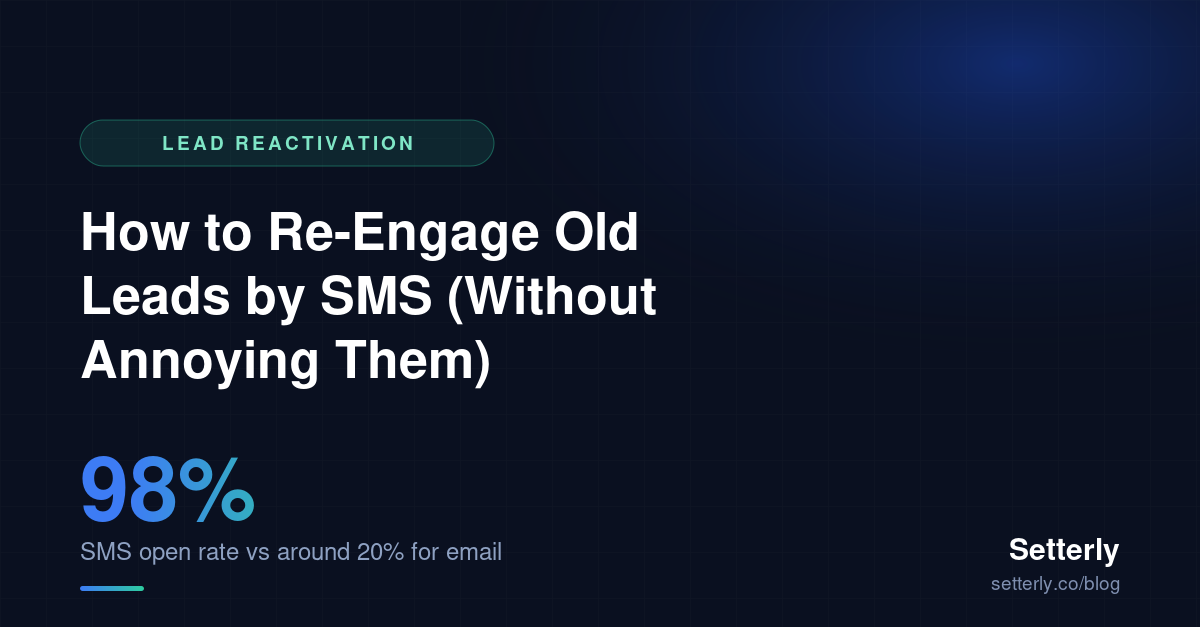
A text asks for none of that. It waits. It can be answered in ten seconds from a meeting, a sofa, or a bath. Given the choice, modern buyers take the channel that respects their time, which is why SMS open rates run at around 98% against roughly 20% for email, with calls from unknown numbers faring worse still.
Your timing amplifies the problem
Most teams also call too late. Leads contacted within 5 minutes are roughly 9x more likely to convert than those contacted after 30 minutes. By the time the average business dials, hours or days after the enquiry, the lead has moved on mentally and the unknown number carries even less meaning. We've broken down the full numbers in our speed to lead statistics post.
Stack these three together and the standard playbook, call repeatedly until they crack, is working against how every one of your buyers now behaves. Persistence still matters, and our guide on how many follow-ups a lead needs makes that case with data. The channel carrying that persistence is what has to change.
What works instead: switch the channel, then earn the call
The fix runs in three steps. Open on SMS, hold a real conversation, then book a call the lead will actually answer. Each step sets up the next.
Step 1: open with a text that references their enquiry
The first message has to prove you're the company they contacted, and the fastest proof is their own enquiry reflected back at them.
"Hi Dan, it's [Your company]. You asked us about replacing the bay window at the front back in May. Still on the cards, or has it moved down the list?"
Name, company, their exact request, one easy question. In two lines you've cleared the "who is this?" barrier that kills cold calls, and you've made replying easier than ignoring.
Compare that with the messages leads usually get: "Hi, we tried to call you" or a bare booking link. Both read as broadcast, and broadcasts get the silence they deserve. Our guide to SMS lead reactivation breaks down the four ingredients of a first text that gets replies.
Step 2: hold a real conversation
Replies to that opener arrive with questions, objections and half-answers. "How much roughly?" "We went with someone else for the front but the back needs doing." "Can you do evenings?"
Each reply is a hot lead in that exact moment, and each needs an answer within minutes to stay hot. Answer at speed and the conversation flows to a natural next step. Answer tomorrow morning and you're an unknown number again.
This is the part that breaks human teams and the part AI handles effortlessly. Setterly's AI has held 260,000+ two-way SMS conversations, answering every reply in seconds at any hour, qualifying as it goes. You can see the full flow on our how it works page.
Step 3: book the call they'll answer
Here's the twist: the phone still closes the deal. Once the SMS conversation has confirmed interest and agreed a time, the dynamic flips completely.
Now the lead knows exactly who's calling, when, and about what. The call sits in their calendar because they chose the slot. Your salesperson opens with full context from the conversation instead of a cold "did I catch you at a good time?"
You've stopped being an unknown number and become an appointment. That's the whole play: use the channel they'll answer to earn the channel you close on.
Proof: 6,769 old enquiries, 64% reply rate
Cloudy2Clear, a UK misted double glazing repair franchise, had thousands of leads their branches had called, missed, called again, and marked dead. Classic ghosting at scale: prospects not picking up, files quietly closed.
We re-engaged 6,769 of those old enquiries by SMS, each message referencing the person's original enquiry. 4,321 replied, a 64% reply rate.
Sit with that number. These were the leads phones couldn't reach, the ones written off precisely because they never answered. Given a channel that identified the sender and let them respond on their own terms, nearly two thirds engaged. The campaign booked 673 appointments and generated £639,350 in pipeline, with £107,000+ closed. The detail is in our Cloudy2Clear case study, and glazing firms can see how it applies to them on our windows and doors page.
The automotive version of the story is CarFinance247, a UK car finance broker, where a 200-strong sales team had already worked 3,895 leads for two weeks. Over Christmas, SMS conversations booked 114 appointments from that same pool. Same leads, same phones in the same pockets. Different channel, different result. Dealerships drowning in unanswered internet leads will recognise the pattern, and our car dealer lead follow-up guide goes deeper on it.
Both campaigns worked the same underlying odds. Selling to someone who already knows your business succeeds 60-70% of the time, against 5-20% for a stranger. Every lead ghosting your calls already knows you. The relationship exists. Only the channel failed, and if your CRM is full of leads like this, our database reactivation guide shows how to work through the whole lot systematically.
Stop dialling into the void
Your leads haven't vanished. They're on the other side of a channel problem, screening the calls of every business that contacts them, yours included.
Setterly opens the text conversation, qualifies the lead, and books the call they'll actually answer. 3,000+ appointments booked so far, and you only pay when one lands in your diary. See the results page for more.
Frequently asked questions
Why do leads not answer the phone?
Leads screen calls from numbers they don't recognise, and business calls usually arrive as unknown or "Potential Spam" numbers. Answering also demands an immediate live conversation at a moment the lead didn't choose. Interest in your product usually survives; the unidentified interruption gets declined on habit.
What should you do when a lead won't pick up?
Switch channels rather than redialling. Send an SMS that names your company, references their original enquiry and asks one easy question, for example "Still looking at the conservatory, or has it moved down the list?" Once they reply and interest is confirmed, book a call at a time they choose, which they'll answer because they know exactly who's calling and why.
Do customers prefer text or phone calls?
For first contact and quick questions, text wins comfortably. SMS open rates run at around 98% against roughly 20% for email, and texts let people reply on their own schedule. Phone calls still work best for closing, once the lead has agreed a time by text and knows who's calling.
How do you re-engage leads that are ghosting you?
Send a short SMS referencing their original enquiry, then hold a real two-way conversation with fast replies, then book an agreed call. When Cloudy2Clear ran this on 6,769 old enquiries, 64% replied and 673 booked appointments, generating £639,350 in pipeline.