Hire Another Closer or Fix Your Lead Follow-Up First?
 Cameron Richards, Founder9 min read
Fix your lead follow-up first if your closers have gaps in their diaries, if most enquiries get one or two attempts, or if old leads sit untouched in the CRM. Hire another sales closer only when your current closers are fully booked with appointments that go ahead and you are turning work away. In most home improvement and car sales businesses, the bottleneck is getting enquiries in front of a closer, not closing them.
It is a common mistake. Sales are down, so the owner hires another salesperson. The new closer gets the same leads, followed up the same way, and the numbers barely move. The problem was never the close.
At a glance
- A closer sells the job. A setter, or whatever does the setter's job, gets the customer in front of the closer.
- PipelineOn, a vendor, says 44% of salespeople give up after one call.
- Impel's 2026 UK dealer mystery shop, a vendor report, found a third of dealers stopped after one attempt.
- If closers have empty slots, another closer adds cost, not sales.
- AI appointment setting can work new and old enquiries and feed booked appointments to the closers you already have.
What is the difference between a closer and a setter?
A closer sells: they run the survey, the design visit, the test drive or the finance conversation and ask for the order. A setter books: they contact the enquiry, find out what the customer wants and put a time in the closer's diary.
In small businesses one person often does both, which is where the trouble starts. A good closer is out of the office or in a showroom most of the day. They cannot also call every new enquiry within the hour and chase every quiet one five times. So the setting work gets done when there is time, which means it mostly does not.
In home improvement the closer is the surveyor or sales designer in the customer's home. In car sales it is the sales executive on the forecourt or the broker's account manager on the phone. In both, their time is the most expensive resource in the business. It should be spent with customers who have agreed to talk.
Why do closing rates drop when follow-up is weak?
Closing rates drop when follow-up is weak because fewer of the interested customers ever reach a closer, and the ones who do arrive later and colder. The closer is judged on a smaller, worse set of opportunities than the business actually generated.
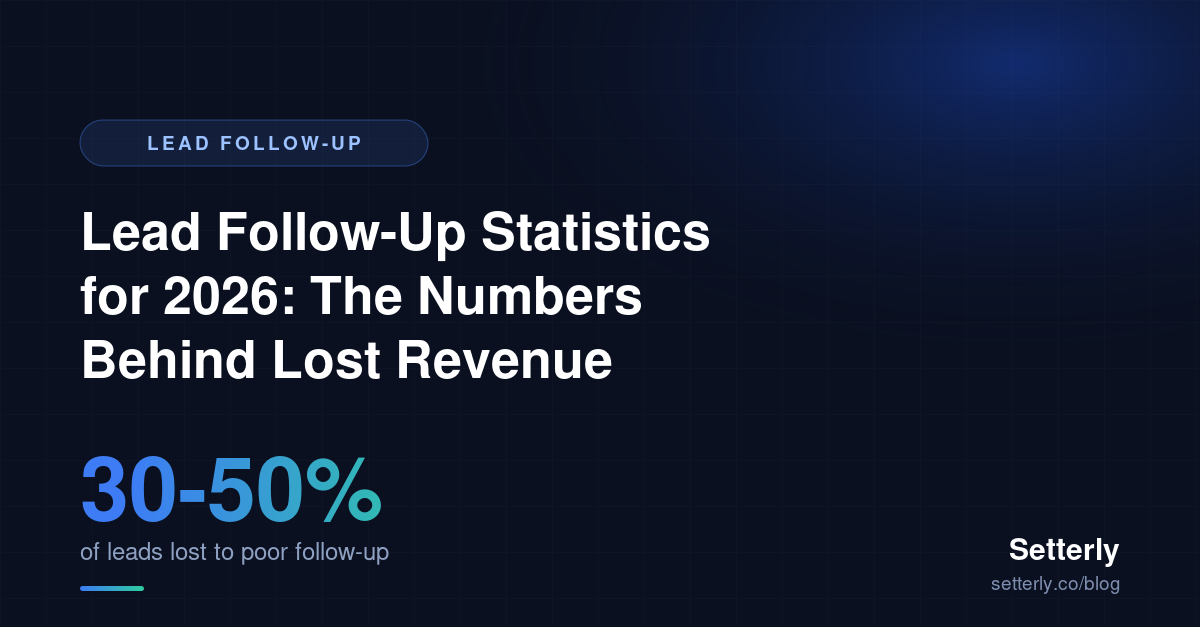
The follow-up gap is well documented. PipelineOn, a vendor that sells follow-up software to contractors, says 44% of salespeople give up after one call. In automotive, Impel's 2026 mystery shop of UK dealers, also a vendor report, found that a third of dealers stopped after a single attempt, and that the median reply to a new car enquiry sent out of hours took 13 hours 12 minutes. Car Dealer Magazine reported that 55% of buyers expect a reply within three hours.
Speed matters as much as persistence. Research from Harvard Business Review, reported by SmartCompany, found firms that contacted online leads within an hour were nearly seven times more likely to qualify the lead than those that waited longer, and 23% of companies never responded at all.
Put those together and the picture is clear. A slow first reply plus one attempt means a large share of the people who wanted to buy never speak to anyone. Adding a closer does not change that. It just gives the same small number of conversations to more people. For the wider numbers, see our lead follow-up statistics.
How do you tell whether the problem is closing or follow-up?
Look at where enquiries fall out. If they fall out before an appointment is booked, it is a follow-up problem. If they fall out after the appointment, it is a closing problem, or a pricing or product problem.
| Symptom | Likely problem |
|---|---|
| Closers have free slots most weeks | Follow-up |
| Most enquiries get one or two attempts | Follow-up |
| Hundreds of no answer leads in the CRM | Follow-up |
| Replies to texts arrive in the evening and nobody answers until morning | Follow-up |
| Plenty of appointments go ahead but few convert | Closing, price or product |
| One closer converts far better than another on the same leads | Closing skill |
| Closers are fully booked and turning work away | Capacity: hire |
Run this checklist before you advertise a sales role:
- Count the gaps. How many unbooked slots did your closers have last month?
- Count the attempts. Pull 50 recent enquiries and count how many times each was contacted, by phone, text and email.
- Time the first reply. For the same 50, how long between the enquiry and the first contact?
- Size the backlog. How many enquiries from the last two years never booked an appointment?
- Compare closers. On the same lead source, do conversion rates differ a lot between closers?
- Check the show rate. How many booked appointments actually went ahead?
If the first four answers are bad and the last two are fine, you have a follow-up problem. Our post on why leads go cold after 7 days explains why the window is so short.
When should you hire another closer?
Hire another closer when your existing closers are consistently full with appointments that go ahead, you are pushing customers out by more than a week or two, and you have checked that follow-up is already fast and persistent. That is a capacity problem, and only another closer fixes it.
Other signs it is time: you are expanding into a new area that needs a local surveyor, a closer is leaving, or customers are complaining about waiting for a visit. Each of those is about capacity or coverage, not follow-up.
Before you advertise, work out what a new closer costs against what they could bring in. Salary, car, commission and the months it takes them to learn your product and pricing all come before the first sale. If the leads to keep them busy are not already there, the hire will spend its first months chasing enquiries, which is setting work at closer pay. Our post on appointment setter salary UK shows how quickly employment costs add up.
Even then, fix follow-up alongside the hire. A new closer ramps faster with a full diary of booked, confirmed appointments than with a list of leads to chase themselves.
What does fixing follow-up look like in home improvement?
In home improvement, fixing follow-up means replying to new enquiries within minutes, making several attempts across calls and texts, confirming every survey and going back to old enquiries and unsold quotes. It is a process and a set of habits, not a new hire.
Old quotes are the fastest win. A homeowner who had a survey and a price for windows, a kitchen or a boiler is about as warm as a lead gets, and most firms make one follow-up call and stop. Our guide on how to follow up on a quote shows a simple cadence, and our guide to how booked surveys get made covers the booking side.
What does fixing follow-up look like in car sales?
In car sales, fixing follow-up means answering web enquiries out of hours, making more than one attempt, using text as well as email and phone, and going back to past enquiries, quotes and customers near the end of their agreement.
Impel's report found text converted at 14% against around 8% for email in its mystery shop, a vendor figure, which fits what most dealers already suspect: people reply to texts. Our car dealership lead follow-up post covers the dealer side and lease renewal follow-up covers brokers.
How does AI appointment setting feed your closers?
AI appointment setting feeds closers by doing the setter's job at any hour and any volume: it texts each enquiry, holds a two-way conversation, answers simple questions and books a time into the closer's diary. Your closers spend their time with customers who agreed to talk.
That is the division of labour we built Setterly around. The AI works the leads you already own, new and old, and your closers do what they are good at. For CarFinance247, a UK car finance broker, the system worked 3,895 leads over Christmas and booked 114 appointments. For a UK franchised dealer group with 20+ sites, 725 leads produced 91 appointments. For Cloudy2Clear, a UK misted double glazing repair franchise, 6,769 old enquiries produced 673 appointments. Those are their results, not a forecast for your business.
You pay per booked appointment, with no setup fee and no retainer, and CRM integration is optional for a one-off fee. That makes it cheap to answer the question in this post with your own data: if your closers fill up, the problem was follow-up. If they do not, you have learned something about closing. Book a call to look at your own leads, or read how it works.
The decision in one line
If your closers have empty slots, fix follow-up. If they are full and turning work away, hire. Most businesses find out they were in the first group.
Frequently asked questions
Should I hire a sales closer or an appointment setter first?
Check your closers' diaries first. If they have regular free slots, you need more appointments, which is a setting and follow-up job. If they are fully booked with appointments that go ahead and customers are waiting, another closer adds capacity.
Why do closing rates fall when follow-up is weak?
Because fewer interested customers reach a closer and those who do arrive later and colder. PipelineOn, a vendor, says 44% of salespeople give up after one call, and Impel's 2026 UK dealer mystery shop found a third of dealers stopped after one attempt.
How do I know if my follow-up is the problem?
Pull 50 recent enquiries. Count how many times each was contacted and how long the first reply took. Then count the enquiries from the last two years that never booked. Few attempts, slow replies and a large backlog point to follow-up.
Can AI appointment setting work alongside my sales team?
Yes. The AI contacts enquiries, holds two-way SMS conversations and books appointments into your closers' diaries. Your team handles the survey, visit, test drive or finance conversation. Setterly charges per booked appointment with no setup fee and no retainer.
Sources
Works for: Windows and doors, Kitchens, Conservatories, Boilers and heating, Car dealerships, Car leasing