Dealership Data Mining vs Lead Reactivation: What's the Difference?
 Cameron Richards, Founder9 min read

Dealership data mining looks at your existing customers to find the ones who could buy or change car again, usually based on their finance, equity, mileage or contract dates. Lead reactivation goes back to people who enquired but never bought, and asks whether they are still looking. One works your customer list, the other works your unsold enquiries, and most UK dealers and leasing brokers have large amounts of both.
This guide explains each approach, compares them side by side, and shows how franchised dealers, used car dealers and leasing brokers use them together. It also covers what automotive database reactivation has produced in practice.
At a glance
- Data mining: analysing customer and sales data to spot who is likely to buy again
- Equity mining: a narrower form of data mining that finds customers in positive equity who could change car
- Lead reactivation: re-engaging enquiries that never became sales
- They work different lists, so they complement each other
- Automotive reactivation campaigns have booked appointments and callbacks from lists teams had already worked
What is dealership data mining?
Dealership data mining is the analysis of a dealer's customer records, sales history, service data and online activity to find patterns and spot customers who are likely to buy again. It is used to target marketing, time offers and plan stock.
AutoAlert, a US dealer software provider, describes data mining as drawing on many sources to understand customer behaviour and market trends. In practice, a dealer might use it to find customers whose car is reaching a mileage or age where they typically change, whose service history suggests rising repair costs, or who have been browsing particular models on the website.
In the US, dealers often call this simply data mining, and many have dedicated staff or software doing it every day. In the UK, the same work is often handled by the sales team, the business development centre or the dealer management system, sometimes under the label of customer retention.
What is equity mining?
Equity mining is a specialised form of data mining that looks for existing customers whose car is worth more than they owe on it. Those customers can often change into a newer car for a similar monthly payment, which makes them strong candidates for a conversation.
AutoAlert describes equity as the gap between a vehicle's market value and the remaining finance balance, and equity mining as weighing factors such as finance timing, depreciation and market conditions to find customers ready to trade up. It is narrower than general data mining: it focuses on current customers and one financial factor.
The UK equivalent is often built around PCP and lease end dates. A dealer looks at customers approaching the end of a PCP agreement, or in positive equity part way through, and contacts them before a competitor does.
What is lead reactivation in automotive?
Lead reactivation in automotive is going back to people who enquired about a car, a lease or finance but never bought, and re-engaging them to see whether they are still in the market. It works the enquiries that never became customers.
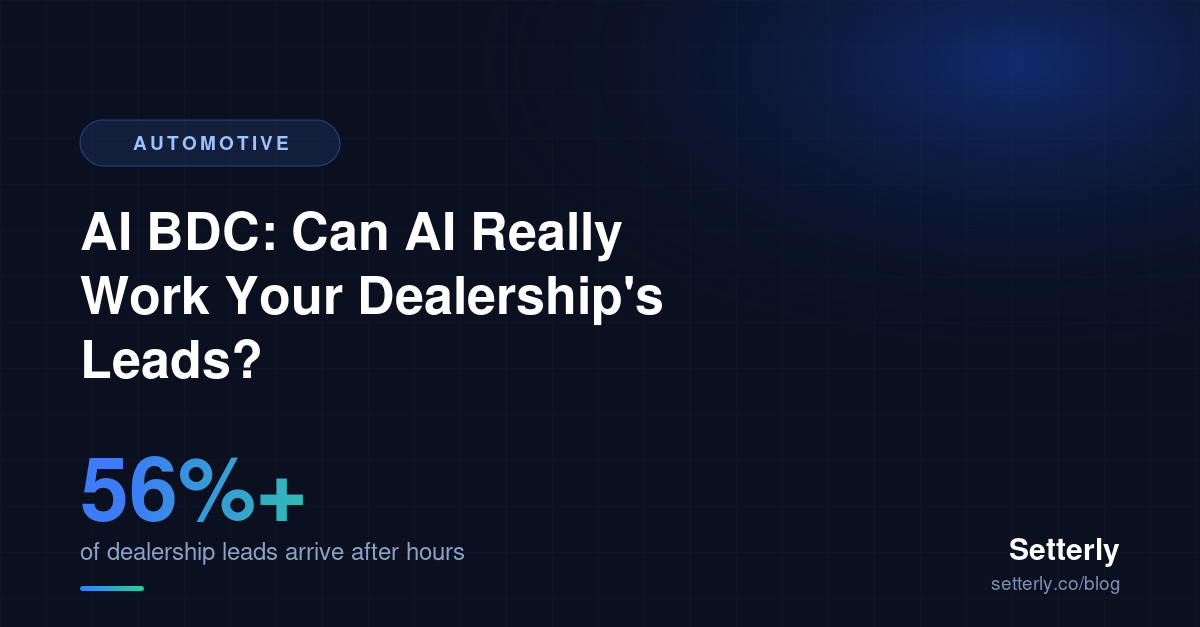
Those enquiries pile up fast. A dealer group or broker can take thousands of website, phone, aggregator and marketplace enquiries a month. The hot ones get worked. The ones that go quiet after a call or two sit in the CRM. Many of those drivers did not buy elsewhere. They were early in their search, waiting on finance, or simply did not answer at the right time.
Reactivation sends a short, personal message about the car or deal they asked about, holds a two-way conversation with everyone who replies, and books test drives, appraisals or callbacks with the ones who are ready. In agency language this is often called database reactivation. Our database reactivation guide covers the general process.
Data mining vs lead reactivation: how do they compare?
The simplest way to see the difference is to look at who each one targets and what triggers the contact.
| Data mining and equity mining | Lead reactivation | |
|---|---|---|
| Who it targets | Existing customers who have bought before | Enquiries that never bought |
| Data it uses | Sales history, finance terms, equity, service records, contract end dates | Enquiry details: car, budget, date, source, last contact |
| What triggers contact | A change in the customer's position, such as equity, mileage or contract end | Time since enquiry, and the chance their situation has changed |
| Main goal | Retain the customer and sell the next car | Turn an unconverted enquiry into a sale |
| Typical channels | Phone, email, SMS, direct mail | SMS, phone, email |
| What it needs | Clean customer and finance data, often specialist software | A list of unconverted enquiries and fast, two-way follow-up |
They are not rivals. Data mining keeps your customers coming back. Lead reactivation recovers the people who never became customers in the first place. A dealer that only does one is leaving the other list untouched.
Why do so many automotive enquiries go unsold?
Automotive enquiries go unsold mainly because follow-up is slow and short, and because many buyers enquire long before they are ready. Few of them actually decide not to buy.
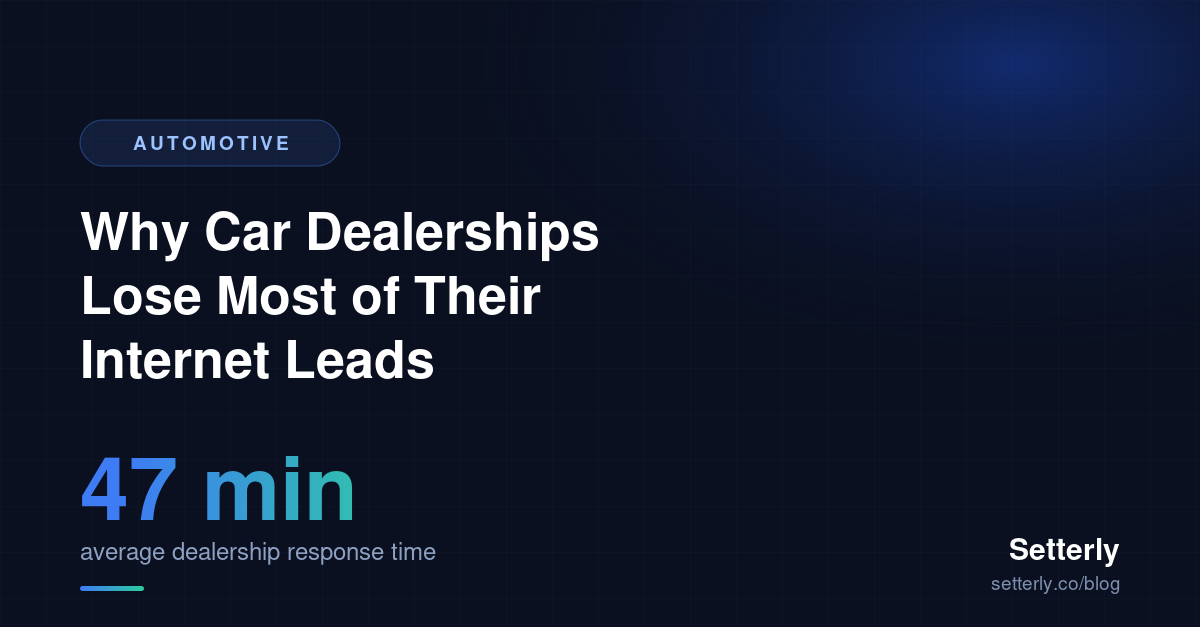
Impel's 2026 mystery shop of UK dealers, a vendor study covering 91 tracked enquiries, found a median out-of-hours time to a tailored reply of 13 hours 12 minutes for new car enquiries and 14 hours 7 minutes for used. A third of dealers stopped after just one attempt. Car Dealer Magazine reported that 55% of buyers expect a reply within three hours.
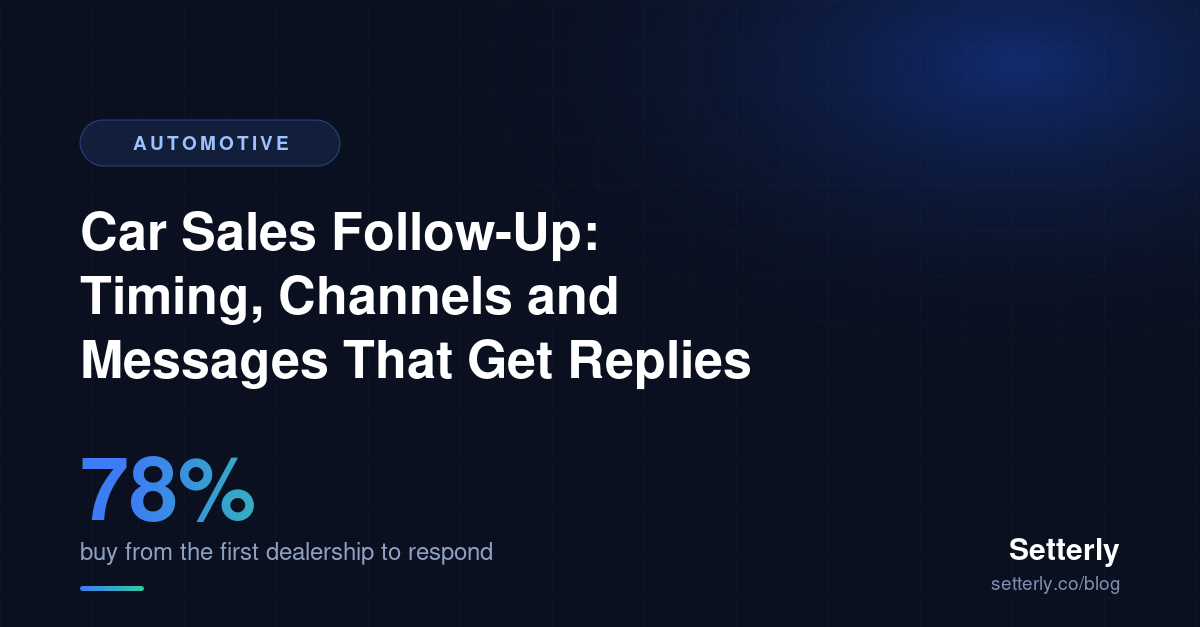
Impel's own interaction data, again vendor figures, put engaged-to-appointment conversion at around 14% on text against around 8% on email. That is one reason SMS has become the main channel for reactivation. Our guides to car dealership lead follow-up and car sales follow-up go deeper on the follow-up gap.
How do UK franchised dealers use both?
Franchised dealers typically use data mining on their sales and service customers and lead reactivation on their unsold enquiries. The two lists rarely overlap much.
On the data mining side, a franchised dealer will look at PCP customers approaching the end of their agreement, service customers whose car is ageing, and customers in positive equity. Manufacturers often supply tools or campaigns for this.
On the reactivation side, the dealer goes back to the website, phone and marketplace enquiries that did not book a test drive or did not buy after one. A UK franchised dealer group with 20+ sites ran a reactivation campaign on 725 old leads with Setterly. 65% replied, and the campaign booked 91 appointments, a 12.6% appointment rate, with £136,500 in pipeline. Pipeline means appointments booked multiplied by the client's average order value. More on dealer campaigns is on our car dealerships industry page.
How do used car dealers use both?
Used car dealers often have less finance data to mine, so lead reactivation tends to carry more of the load. Their enquiry lists are large and fast-moving, and stock changes daily.
Data mining for a used dealer might mean finding past customers whose car is now three or four years older, or who bought on finance that is nearing its end. Reactivation means going back to people who enquired on a specific car that has since sold, and offering similar stock.
A five-site UK used car dealer reactivated 827 old leads with Setterly. 65% replied, and the campaign booked 61 appointments, a 7.4% appointment rate, with £109,800 in pipeline. These are past results from one campaign, not a forecast for any other dealer.
How do car leasing brokers use both?
Leasing brokers use the equivalent of equity mining on their existing customers' contract end dates, and lead reactivation on the quotes that never ordered. Both matter because broker margins are under pressure and each new enquiry costs money.
The renewal side is a broker's version of equity mining. Every lease has a fixed end date, so a broker knows exactly when each customer will need a new car. Contacting them early, before they extend with the funder or get picked up by another broker, is one of the cheapest sales available.
The reactivation side covers the much larger pool of enquiries that never ordered: aggregator leads that compared several brokers, drivers who enquired months before they needed a car, and applicants who were declined by one funder but might be approved by another. Leasing brokers have booked callbacks from exactly these lists:
| Business | Old leads | Result |
|---|---|---|
| Eden Leasing, a UK car leasing broker | 725 | 93 callbacks booked (12.8%) |
| Flexed, a UK car leasing broker | 1,135 | 109 callbacks booked (9.6%) |
| A UK short-term car leasing company | 1,133 | 47% replied, 106 appointments, £127,200 pipeline |
Our guide to car leasing lead generation covers the economics of broker enquiries in more detail, and our car leasing industry page shows how reactivation fits a broker.
What has automotive database reactivation produced?
Here are past results from Setterly automotive campaigns. They show what happened on specific lists, all of which the clients' own teams had already worked.
| Business | Old leads | Reply rate | Appointments or callbacks | Pipeline |
|---|---|---|---|---|
| CarFinance247, a UK car finance broker | 3,895 | 33% | 114 appointments | £171,000 |
| A UK franchised dealer group with 20+ sites | 725 | 65% | 91 appointments | £136,500 |
| A five-site UK used car dealer | 827 | 65% | 61 appointments | £109,800 |
| A UK short-term car leasing company | 1,133 | 47% | 106 appointments | £127,200 |
| Eden Leasing, a UK car leasing broker | 725 | - | 93 callbacks booked | - |
| Flexed, a UK car leasing broker | 1,135 | - | 109 callbacks booked | - |
CarFinance247's campaign ran from December 2025 to January 2026, over Christmas, on leads a 200-strong sales team had already worked for two weeks. It booked 114 appointments and £171,000 in pipeline during the quietest trading period of the year. Emily Henshall, their Head of Paid Media, said: "Setterly helped us unlock additional value from a database of over 1,000,000 leads through AI-driven SMS outreach." The detail is in the CarFinance247 case study.
Across all clients, Setterly has booked 3,000+ appointments from 260,000+ SMS conversations for 30+ businesses. You can see more on our results page and our automotive lead reactivation page.
Which should a dealer or broker do first?
Start with whichever list is bigger and less worked. For most UK dealers and brokers, that is the unsold enquiry list, because customer retention usually has some process already, while old enquiries usually have none.
A simple way to decide:
- If you have no process for contract end dates or PCP ends, set one up. It is the warmest list you own
- If you have thousands of enquiries from the last two years that nobody has contacted in months, reactivate them
- If your team is stretched, look at an AI system that answers replies instantly and books straight into the diary. Our guide to an AI BDC for dealerships explains what that should and should not do
- Measure both on appointments and sales, not on messages sent
With Setterly, reactivation is free to start: you pay per booked appointment, with no setup fee and no retainer, and CRM integration is optional for a one-off fee.
Is it legal to contact old automotive enquiries in the UK?
Usually yes, if you follow PECR and UK GDPR. The soft opt-in lets a business text people who gave their details when enquiring about similar products, provided they were offered an opt-out when the details were collected and in every message since.
Include a clear opt-out in every text, honour it straight away, and take more care with leads that came from third parties such as some aggregators, because the soft opt-in covers your own enquiries. The ICO's guidance sets out the detail, and our trust page explains how Setterly handles consent and opt-outs.
If you want to see what your own unsold enquiries could look like as booked appointments, book a call.
Frequently asked questions
What is the difference between data mining and lead reactivation?
Data mining analyses existing customers' data to find who is likely to buy again. Lead reactivation goes back to people who enquired but never bought. Data mining works your customer list, reactivation works your unsold enquiries.
What is equity mining at a car dealership?
Equity mining is a narrower form of data mining that finds customers whose car is worth more than they owe on it. Those customers can often change car for a similar monthly payment, which makes them good candidates for an upgrade conversation.
What is database reactivation in automotive?
It is re-engaging the unconverted enquiries in a dealer's or broker's CRM, usually by two-way SMS, and booking test drives, appraisals or callbacks with the people who are still in the market.
Do leasing brokers need data mining?
Brokers have a simple version built in: every lease has an end date. Contacting customers well before it is the broker's equivalent of equity mining. Reactivation then covers the quotes that never ordered.
What does automotive lead reactivation cost with Setterly?
It is free to start and you pay per booked appointment. There is no setup fee and no retainer, and CRM integration is optional for a one-off fee.
Sources
Works for: Car dealerships, Car leasing, Car finance